Morning Coffee: Goldman Sachs CEO’s best friend might have done him a huge favour. Investment bankers are less male and pale than everyone thinks
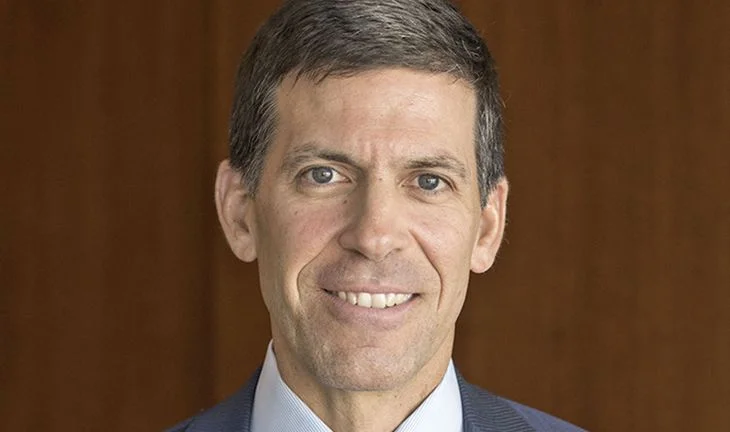
The shareholder vote on the Goldman Sachs remuneration committee report is being described as “unusually controversial” this year, but honestly, it’s not easy to see what the nature of the controversy is. It is an advisory ballot – shareholders can’t actually vote down the top management pay packages. Even if they could, it wouldn't be a nuclear strike on the succession planning. And for a “controversial” vote, it seems to be quite difficult to find anyone prepared to publicly stand up and say anything other than that David Solomon and John Waldron’s very ample retention packages, valued at around $80m each, are not only deserved but close to the going rate for their jobs.
Who is your Ideal Employer in finance? 💥 Answer our survey for a chance to win $1k
So it seems that in context, “unusually controversial” really means “good gracious, that’s a lot of money”. This means it’s a good opportunity to reflect on the two competing theories of how investment banking compensation is determined. One of them is wrong but widely believed; the other is right.
The incorrect theory – which people wrongly believe in because it’s the way that banks tend to describe the process, and it’s close to how things work in other industries – is that employees are scored by reasonably objective judges against a list of quantitative and qualitative targets, and that through a process of rational analysis, their performance is judged against their peers, and then turned into a target for total remuneration in the context of the overall financial performance of their business unit and that of the entire firm.
To reiterate, this theory is wrong.
“The correct theory” is that the labour market is a market and prices are set by supply and demand. The compensation committee is a process of estimating, for each employee, what their likely market value is to a competitor, minus an estimate of the monetary value of the inconvenience of switching jobs. If these estimates all add up to a sum of money that looks OK as a bonus pool that’s great; if they don’t then there is a secondary process of “massive political infighting” and the losers are compensated with promises of being looked after in future years, which may or may not be kept.
One of the fascinating things about economics is that although every individual involved in annual appraisals and compensation committees might think they’re operating in line with the first model, the results they produce are invariably better described by the second. It’s the invisible hand at work.
But what about the very highest levels? CEOs and Presidents of investment banks don’t move jobs very often, so there isn’t a clearly observable market price for them. So maybe they are the only bankers whose compensation is determined by the (otherwise) wrong model?
Often that’s true. But in the past year, John Waldron, like so many other valuable but illiquid assets, found an active and executable bid from private equity. In the process of his decision not to go to Apollo, it was determined that the market value of his services was in the region of $500m, and the inconvenience discount for leaving Goldman was around $420m. Having set that “mark to market”, it was hardly sustainable to pay Solomon any less. So as well as securing his own pole position in the succession stakes, Waldron appears to have helped set the bar for his long term friend and colleague. Thank you, John.
Elsewhere, some excellent data journalism based on the published equal opportunities reports of the top four US banks busts a number of myths about the industry. Restricting the analysis to front-office employees, investment bankers are actually significantly less likely to be “non-Hispanic white” than the US population (49% of front office bankers, compared to 61% in the last Census). The gender balance of the front office is also surprisingly even – the split between men and women is 51/49.
Things aren’t quite the same at higher ranks – for those described as “Executives”, the gender split is more like 70/30, and 74% self-describe as non-Hispanic white. And the industry is actually slightly less Black and Hispanic than the US population, the difference being made up by the fact that Asians account for 6% of the population but 19% of the investment banking front office. Nonetheless, it’s quite different from the portrayal of the industry in most popular culture (except “Industry”).
Meanwhile …
Spare a thought for the Gen Xers on your trading floor and perhaps wish them a supportive “OK Boomer”. They’ve been through multiple recessions, several rounds of technological career change and now they’re watching their retirement savings disappear again. (Quartz)
Jain Capital has now reached the stage of pod shop maturity where it’s losing big names as well as hiring them – commodities manager Anurag Nema has gone after a year on the Jain Train, leaving for Caxton’s Singapore office. (Financial News)
After their lowballed first offer, consulting firms have started offering some serious price cuts, potentially totalling $20bn, to the federal government. (WSJ)
American banks always need to worry about state regulation as well as Federal – New York City has reminded anyone thinking about dropping their environmental commitments that if you want to manage New York pension money you have to meet their standards. (FT)
Other teams in M&A franchises have been a bit glum, but the Financial Institutions Groups have had no time to worry about “geopolitical uncertainty” or any of that stuff. They’ve done $50bn of deals in the last five days alone. (Bloomberg)
As the saying goes, it’s an ill wind that blows nobody any good. The freezing up of IPOs and distributions from private equity funds has been a windfall for the “secondaries” industry. (Institutional Investor)
Some hedge funds and investment banks have made investments in secondary UK offices in Birmingham, but it’s difficult to get enthusiasm for a financial centre when a garbage strike has led to “rats the size of cats” being found in the street. (Bloomberg)
Have a confidential story, tip, or comment you’d like to share? Contact: +44 7537 182250 (SMS, WhatsApp or voicemail). Telegram: @SarahButcher. Click here to fill in our anonymous form, or email editortips@efinancialcareers.com. Signal also available.
Bear with us if you leave a comment at the bottom of this article: all our comments are moderated by human beings. Sometimes these humans might be asleep, or away from their desks, so it may take a while for your comment to appear. Eventually it will – unless it’s offensive or libellous (in which case it won’t.)