A day in the life of an options trader at Citadel Securities in New York
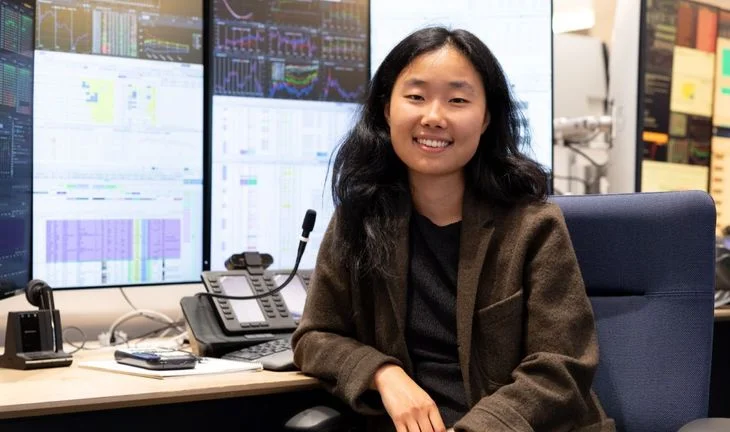
Jamie is a block index options trader working for market-making firm Citadel Securities in New York. She joined the firm three years ago straight out of university, having previously completed an internship there while studying for her Computer Science degree at MIT. This is what a typical day in her life looks like. On the block index options desk, Jamie quotes prices for large-volume options trades that are tied to market indices, rather than individual equities, for Citadel Securities' clients.
07:00 – I wake up and get ready for the day. Our office is in Midtown, and I sometimes grab a coffee on the way in. I'm usually at my desk between 8am and 8.30am.
08:30 – We usually have a meeting to start the day, before trading opens at 9:30. Who I’m meeting varies; some days it's just my immediate team on the block index options desk, other days it's the broader options floor, and sometimes it's my skip [boss's boss, who runs the entire block] getting all of our reports together to talk through risk, how the desk is tracking, and make sure everyone is aligned before the market opens.
09:00 – Half an hour before the market opens, my team sits down to discuss our overnight positions and any news that's broken. We'll also talk over what we want to achieve during the day; a position we want to watch closely, or specific flow we think will come into the desk, so we can be prepared for it.
09:30 – The market opens. This is usually the busiest part of my day. I work on an institutional market-making desk, which means our clients initiate orders through our sales team and ask us to quote and make markets for them, and a lot of that activity is concentrated right at the open. In practice, it means we’re handed buy or sell positions by our sales team and asked to put a price on them.
Our job is to think about the risk of that trade and land on a price; one that's appropriate for the size and for how liquid that symbol is, but also a price that will actually win us the trade. Institutional clients usually aren't only asking us – they're putting the same trade out to several dealers at once, so we're in competition. If the client likes our price, they trade with us, and then the next step is execution.
What we optimise for shifts from client to client. Some just want a price as fast as possible. Others are highly price-sensitive and will give us the time to think about how we'd hedge the position and whether it fits the risk we're already carrying. Some clients would rather we show one clean price they can trade on than go back and forth, and they care about how quickly they hear back and whether our prices stay consistent even when markets get choppy. It's a very people-facing business and we continuously strive to make the client experience as seamless as possible. Although I'm a trader, I'm constantly working with our sales team and other colleagues across the business. It's a very collaborative environment, and everyone plays a role in helping us serve clients well.
11:30 – Things start to quiet down around this time so I shift to project work, such as studies on previous trading periods – looking at a specific type of flow or doing some research on our P&L over the past couple of weeks. One thing I really value about my job is autonomy: each trader sees different flow, so what you choose to dig into is shaped by what you personally experience in the market. At Citadel Securities, we’re encouraged to develop our own ideas, test them rigorously, and take ownership of improving how the desk operates. If a client did a big trade with us a couple of weeks ago, I might backtest how similar positions have performed in our book, or look at what other clients have done, and try to understand how that position relates to everything else we're holding.
I'll also regularly sit down with quantitative researchers or software engineers who build the tools we use every day. They'll often ask for feedback on new dashboards or trading systems, and because we're the end users we can help shape how those tools evolve.
13:00 – I’m a big breakfast eater, so I tend to have lunch later than most. We have a kitchen on every floor here in New York, so a lot of the time I'll just eat there, and about once a week the desk does a "lunch roulette" to see who's ordering for everyone. Chinese one week, tacos or a cava-style bowl the next. Most traders grab lunch when they can and eat at their desks, since we're trading all day.
14:00 – Around this time, we start thinking about our overnight positions and what we want to get done before the close. If our risk has changed materially during the day and it's not something we want to carry overnight, we'll talk together as a desk and look for trades to put on in the market. We're still quoting to clients throughout. Even though everyone has ownership over their own work, we make decisions together because managing risk is a team effort.
15:00 – Things start to pick up here again, as clients are looking to hold specific overnight positions.
16:15 – Index options trading closes at this time, 15 minutes later than single stocks. On a busy day we'll take half an hour straight after to go back through the trading we did – if someone missed something, we'll review it all together and talk about how the day went in general.
16:45 – I’m usually back in meetings around this time. We interface with many other parts of the business, such as the core tech team. One thing I enjoy is that traders have direct input into the tools we use every day, so we're constantly giving feedback and helping shape new functionality. Because it’s currently intern season, I run the occasional education session for them. Because you need specific licensing before you can trade options and stocks, we simulate trading through exercises that develop the same instincts we'd use on the desk. Helping teach those sessions has been one of the most rewarding parts of my role because it's a chance to share what I've learned, even though I'm only a few years into my career.
18:00 - Some evenings I'll come back to my desk and carry on with project work, and other days I'll head straight home. The project work is one of my favourite parts of the role because it's where we can step back from day-to-day trading, analyse what we've learned and identify ways to improve how we trade in the future. Most days I leave the office between 6pm and 7pm. If I'm staying late, or other people in my intern year are around after the education sessions, we'll sometimes go out for dinner together.
19:00 - The weather's improved, so I've started playing tennis outdoors with coworkers and friends. Some of the people I started with have become close friends, so it's common for us to spend time together outside the office too. Once or twice a week I'll go out to dinner, whether that's with colleagues, a broker, or the salespeople and clients we work with.
23:00 - My evenings at home are pretty low-key – if I've done something after work I'll just wind down for an hour or two. I usually end up going to sleep around midnight. I keep telling myself I'll make it earlier, but it's the routine I've settled into, and it works for me.
Have a confidential story, tip, or comment you’d like to share? Contact: +44 7537 182250 (SMS, WhatsApp or voicemail). Telegram: @SarahButcher. Signal: sarahbutcher.22 Click here to fill in our anonymous form, or email editortips@efinancialcareers.com.
Bear with us if you leave a comment at the bottom of this article: comments are moderated intermittently by human beings. Sometimes these humans might be asleep, or away from their desks, so it may take a while for your comment to appear. You must take sole responsibility for comments you post on this site. We will take reasonable steps to weed out anything that we consider to be offensive or inappropriate.